Architecture, Design and Building Science

This program's collection of continuing education courses provides the architect/student with a catalog of courses on every construction division. Courses include products and their application, safety, the environmental impact of products, and application case studies. Users can search the catalog using CSI division numbers, keywords, manufacturer names, or product descriptions.

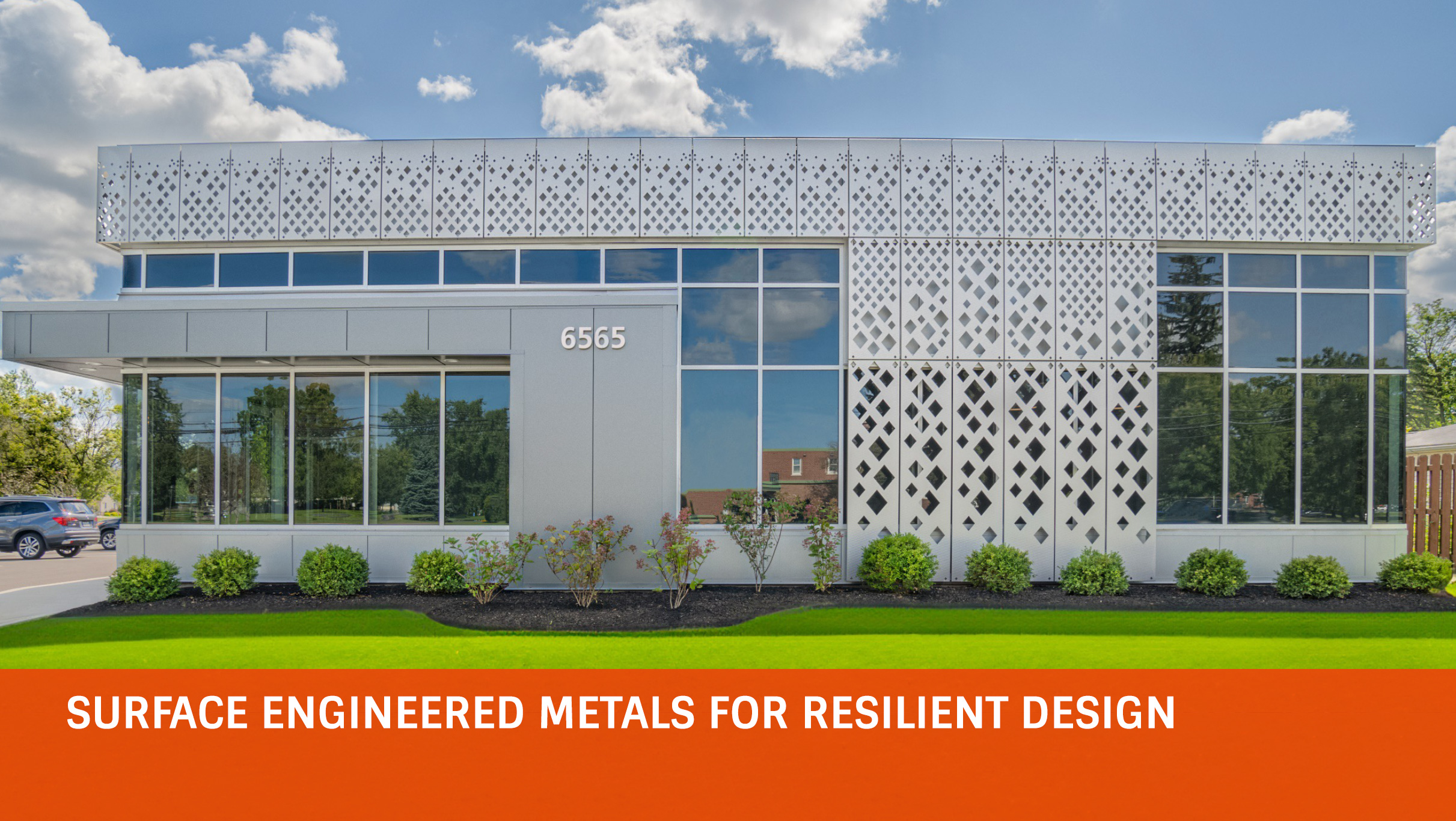
Surface Engineered Metals for Resilient Design

Program: Architecture, Design, and Building Science

The purpose of this presentation is to give you a clear understanding of the features and benefits of textured metals and discover how to best specify stainless steel and metal alloys in your projects. The first part of our talk will introduce the ecological and economic properties of textured stainless steel as well as educate you on the composition of metals and alloys. The second portion of this presentation will illustrate the process of texturing metals and their applications, as well as how to specify them. The session will also review projects that use textured metals - with beautiful results.

HSW Justification:
Most of this course is dedicated to explaining the aesthetic, ecological and economic advantages of textured metals. Most often, the metal used in stainless steel, which is very long-lived, valuable and 100 percent recyclable. The case studies focus on many beautiful installations that enhance the lives of occupants and visitors through the art and craftsmanship of the installations.

Learning Objective 1:
Students will understand ecological, economic, health and safety benefits of utilizing metals that can be deep textured.

Learning Objective 2:
Students will explore current applications that employ deep textured metals because of their ecological benefits, enhanced performance, and aesthetic attributes.

Learning Objective 3:
Students will learn compositions of metals that can be deep textured, how each performs under varying environmental constraints, and how to safely and economically specify deep textured metals.

Learning Objective 4:
Students will discover end user benefits of deep texturing metals, including performance enhancement, material usage reduction and longer product lifecycles.

Meet the Expert

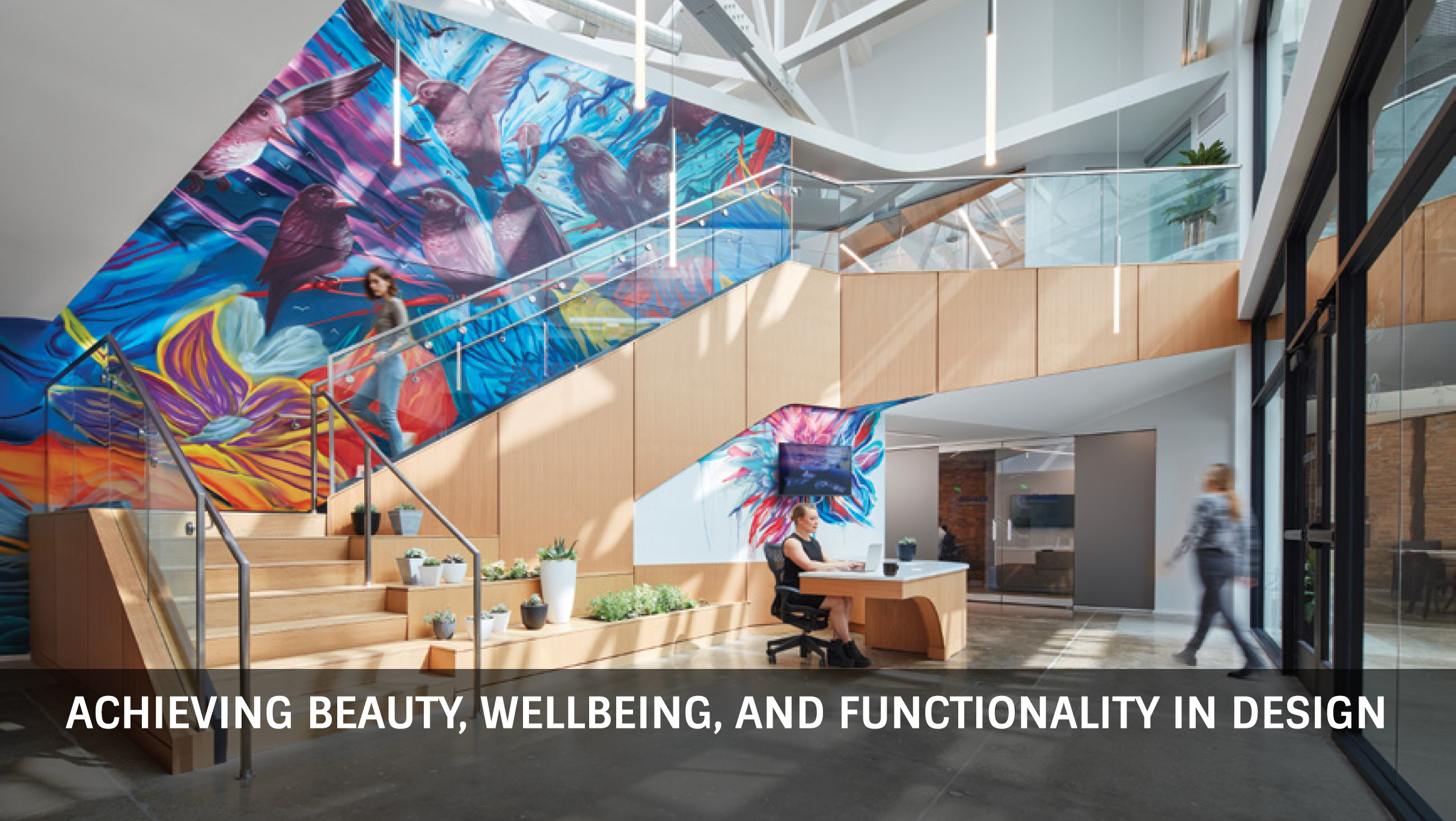
Achieving Beauty, Wellbeing, and Functionality in Design

Beauty, functionality, and wellness-enhancing can co-exist in design, with the right products. This article explores solutions that help architects achieve these important multi-benefits. Pavers that create beautiful outdoor spaces that are easy to maintain. Skylights that allow daylight and fresh air into the interior. Underlayment that improves acoustics and sound management, while protecting the integrity of the interior air quality. Each improves the functionality of the space and the wellness of the people in the built environment.

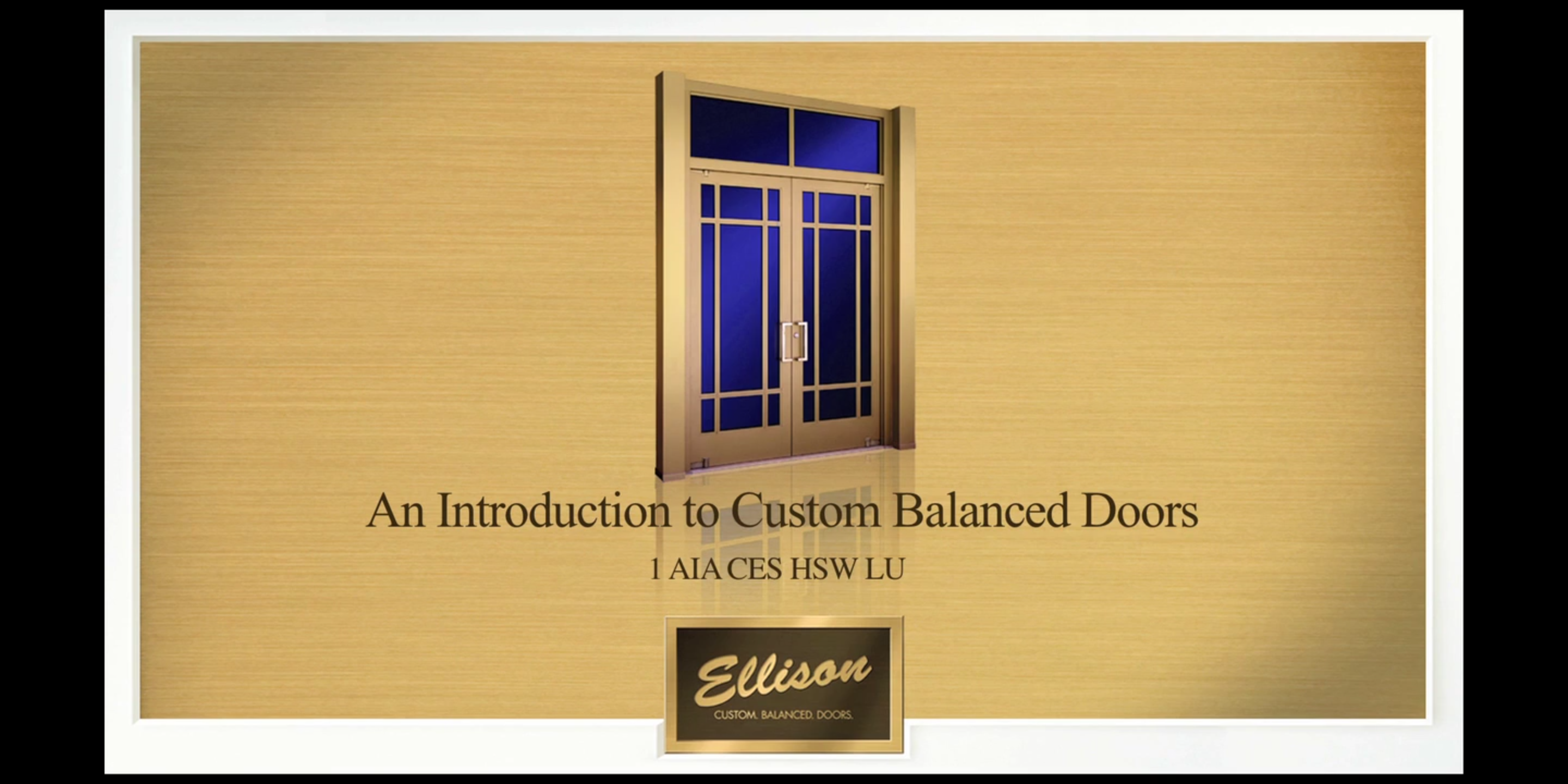
An Introduction to Custom Balanced Doors

This course will introduce you to the custom balanced door. You will learn about the system components and the differences between a Balanced door and a conventional hinged or pivoted swing door. Then we'll take a closer look at how a balanced door works in an installation. Finally you'll learn about the specific engineering requirements needed to accommodate balanced doors.

HSW Justification:
Balanced doors are safer than conventional doors because they require a smaller interference zone on the sidewalk. Also, they open with ease which benefits smaller people, weak or disabled persons, and the elderly. The majority of this course deals with those benefits and with the mechanical features of the door that make these health and safety benefits possible.

Learning Objective 1:
Understand the differences between the balanced door and a conventional hinged or pivoted swing door

Learning Objective 2:
Know specific requirements for ADA handicap guidelines LO 5: Understand how the balanced door interfaces with power operation LO 6: Understand specific engineering requirements to accommodate balanced doors

Learning Objective 3:
Understand what components make up a typical balanced door system

Learning Objective 4:
Know how the design concept works in an actual installation

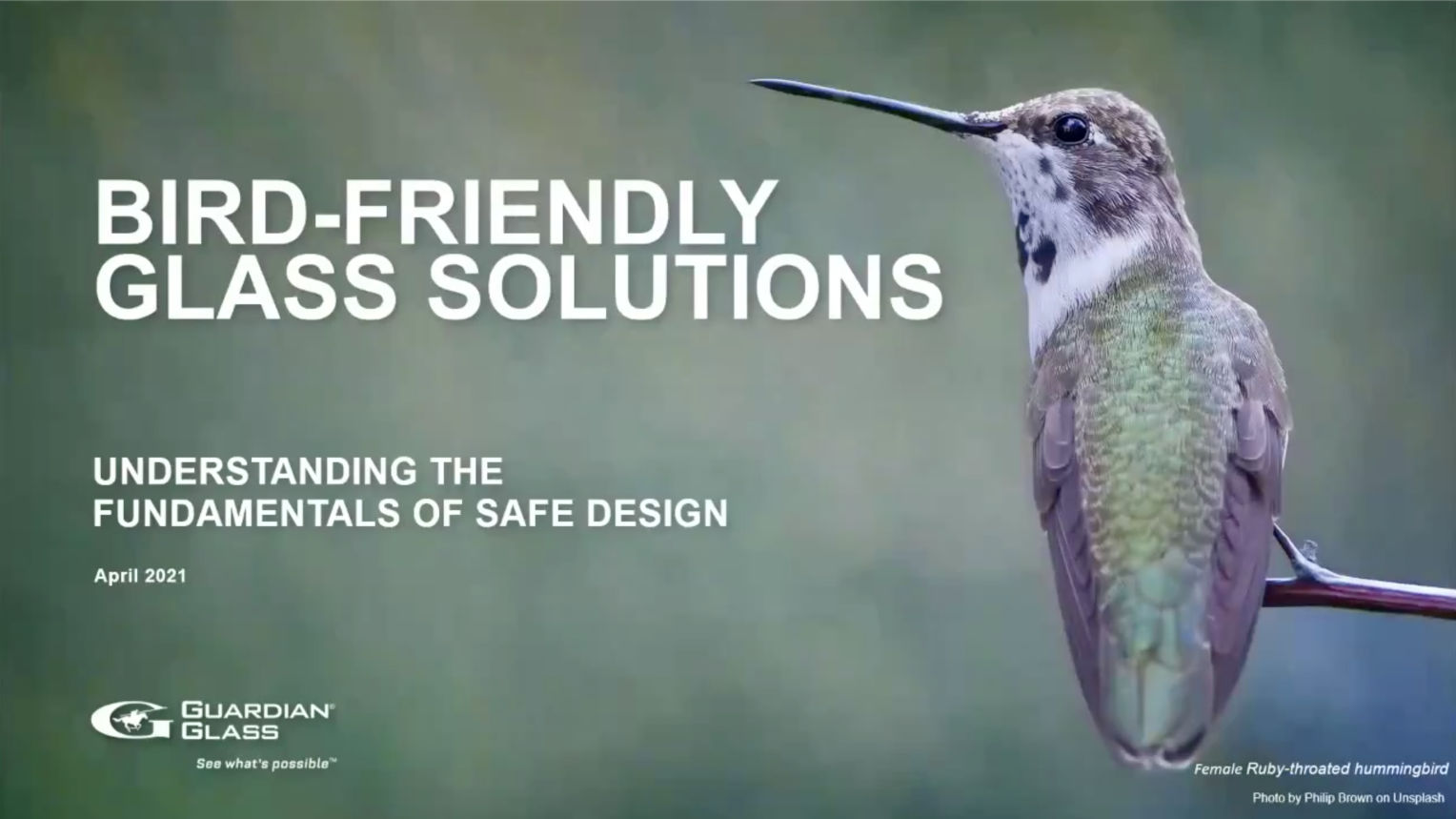
Bird Friendly Glass Solutions

Architecture tells us a great deal about society. In fact, glass and glazing are used to blur the lines between inside and out, helping elevate performance and the experiences of people. Yet while humans can use environmental cues to identify glass as a barrier, there is growing realization that birds cannot. The solution is bird-friendly glass that delivers on performance, energy efficiency and the needs of people. This course from Guardian Glass is intended to provide the basis for a better understanding of how to recognize issues affecting the bird population while learning about best practices and design fundamentals for smarter, safer buildings.

Your session will expire soon. Click below to stay logged in.

Stay Logged In Logout
×